

Essential Guide to End of Tenancy Notice in Dubai: Tips for Landlords and Tenants
Introduction
In Dubai’s fast-moving rental market, ending a tenancy is a process that requires clear communication, proper notice, and strict compliance with the law. Whether you’re a landlord planning to reclaim your property or a tenant preparing to move out, understanding how end of tenancy notice in Dubai works will save you from costly disputes.
This guide breaks down everything you need to know — from legal requirements under Dubai tenancy law, to best practices for drafting and serving notices.
What is an End of Tenancy Notice?
An end of tenancy notice is a formal written communication issued by either the landlord or tenant to indicate they do not wish to renew the rental contract. In Dubai, tenancy agreements typically run for one year, automatically renewing unless one party provides proper notice.
Legal Basis for End of Tenancy Notice in Dubai
The notice system is governed by Law No. 26 of 2007 (as amended by Law No. 33 of 2008). According to the law:
-
Landlords must provide 12 months’ notice for eviction if they plan to sell or personally use the property.
-
Either party must provide at least 90 days’ notice before making changes to the contract, such as rent increase or non-renewal.
Failure to comply with these rules can invalidate the notice.
End of Tenancy Rules for Landlords
When Landlords Can End Tenancy
-
Sale of the property
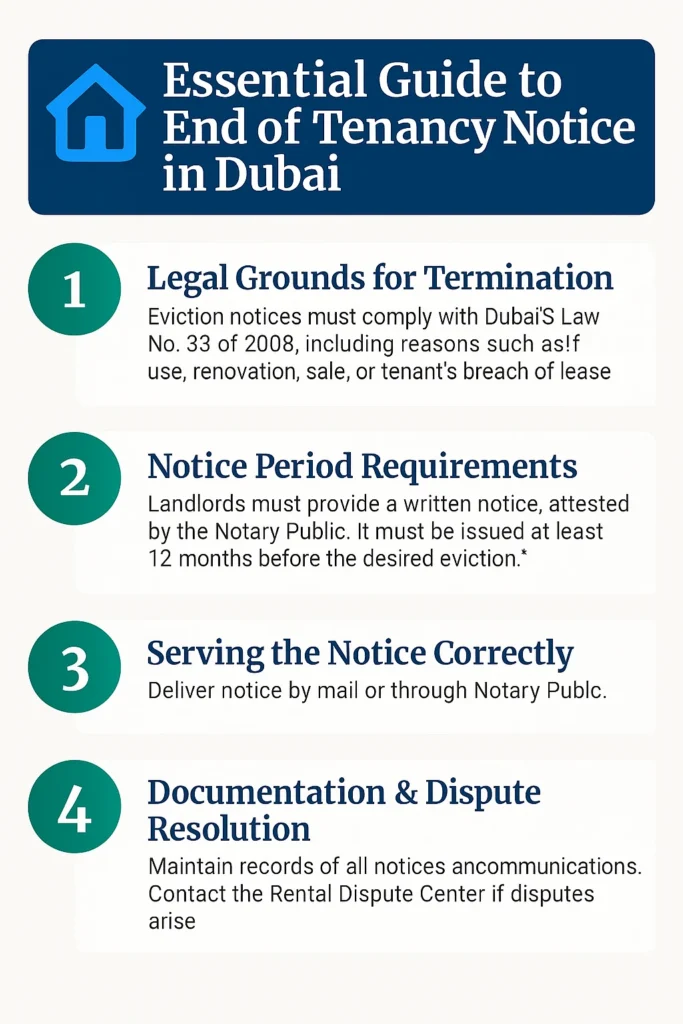
Essential Guide to End of Tenancy Notice in Dubai: Tips for Landlords and Tenants -
Personal use or family use
-
Major renovation or demolition (with permits)
-
Tenant breaches contract (e.g., unpaid rent, subletting, misuse)
Notice Period for Landlords
-
12 months (sale/personal use)
-
30 days (non-payment of rent after warning)
-
90 days (changes to contract terms)
How to Serve Notice
-
Must be in writing
-
Delivered via Notary Public or registered mail
-
Digital notices (WhatsApp/SMS) are not legally valid
End of Tenancy Rules for Tenants
When Tenants Can End Tenancy
-
Non-renewal at lease expiry
-
Relocation for work/family reasons (with landlord consent if early termination)
-
Dispute over unlawful rent increases
Notice Period for Tenants
-
90 days’ notice before lease expiry if not renewing
-
Early termination requires landlord’s approval (and may involve penalties unless agreed)
Best Practices for Tenants
-
Provide notice in writing and retain proof
-
Ensure all dues (rent, utilities, service charges) are cleared
-
Request property inspection to avoid unfair deposit deductions
Step-by-Step Process: Ending a Tenancy in Dubai
Step 1: Review the Tenancy Agreement
Check your Ejari-registered contract for clauses on termination, notice, and renewal.
Step 2: Draft the End of Tenancy Notice
The notice should include:
-
Tenant/landlord details
-
Property address
-
Contract end date
-
Reason for termination (if required by law)
-
Signature and date
Step 3: Deliver the Notice
Send via:
-
Notary Public
-
Registered courier service
-
Official channels (e.g., DLD-approved methods)
Step 4: Conduct Exit Inspection
Schedule a walkthrough with both parties to document property condition.
Step 5: Settle Final Payments
-
Tenant clears bills and rent dues
-
Landlord refunds security deposit (minus valid deductions)
Sample End of Tenancy Notice (Tenant to Landlord)
Subject: End of Tenancy Notice – [Property Address]
Dear [Landlord’s Name],
I am writing to formally notify you that I will not be renewing the tenancy contract for the property located at [Address], which is due to expire on [Contract End Date]. This notice is being provided more than 90 days in advance, in compliance with Dubai tenancy law.
Please confirm a convenient date for the final inspection and security deposit settlement.
Sincerely,
[Tenant’s Full Name]
[Emirates ID]
Common Mistakes to Avoid
| Mistake | Consequence |
|---|---|
| Not registering Ejari | Contract may be unenforceable |
| Giving notice verbally | Notice invalid in disputes |
| Serving notice too late | Automatic renewal of contract |
| Unlawful deductions from deposit | Tenant may file RDC case |
Rental Disputes and the RDC
If disagreements arise, either party can escalate the case to the Rental Dispute Center (RDC).
-
Filing fee: 3.5% of annual rent (max AED 20,000)
-
Judgments typically issued within 30 working days
-
Bailiffs enforce eviction if tenant refuses to vacate
Frequently Asked Questions
How much notice must I give to end tenancy in Dubai?
-
Tenants: 90 days before lease expiry
-
Landlords: 12 months’ notice for sale or personal use
Can I terminate a lease early in Dubai?
Yes, but only with landlord’s approval or if your contract includes an early termination clause.
Can a landlord refuse to return my deposit?
Only if they can prove property damage or unpaid bills. Otherwise, the deposit must be refunded.
What if the tenant refuses to leave after notice?
The landlord can file a case with the Rental Dispute Center, which can enforce eviction.
Is WhatsApp notice valid in Dubai?
No. Notices must be delivered formally through notary or registered mail.
Related Articles from PM Insider Dubai
-
Navigating the Dubai Rental Dispute Center: A Landlord’s Guide
-
Complete Guide to Dubai’s Tenancy Law for Landlords (2025 Update)
Conclusion
Ending a tenancy in Dubai doesn’t need to be stressful if you follow the law and communicate clearly. Both landlords and tenants must respect notice periods and legal procedures to avoid disputes. By documenting every step and using the correct notice channels, you ensure a smooth transition at the end of the lease.
Explore More on PM Insider Dubai
Stay updated with Dubai’s rental laws and landlord tips at PM Insider Dubai.